Every year, the global drinking water market, mineral water accounts for more than 10%.
But bottled water is a high energy-consuming product. To produce one plastic bottle of drinking water, it takes the equivalent of three bottles of water and a quarter bottle of oil. The production of one ton of PET will generate about three tons of carbon dioxide. Behind the convenience of bottled water is a large amount of plastic that is used once and discarded, resulting in significant energy loss and environmental pollution in the long supply chain from the source to consumption and post-processing.
To this end, developing low-carbon, environmental, and plastic-reducing packaging has become an important issue for many brands. Since September 2019, the 58-year-old Sprite has replaced its iconic green bottle with a more recyclable transparent plastic bottle. Not long after, as part of Coca-Cola's "World Without Waste" initiative, the classic PET coke bottle, which has been popular for many years, launched a "no loss" cap design, achieving equal recycling and reuse of beverage packaging.
Green design, recyclability and the recent surge in bottle-free label designs for PET bottles all reflect the industry’s tireless efforts to explore sustainable packaging.
In addition to various efforts to reduce plastic, are there opportunities for paper bottles, metal cans, or other low-carbon packaging to enter the market? In 2021, the Coca-Cola Hellenic Bottling Company collaborated with Graphic Packaging to replace its plastic bottle packaging with new QuikFlex paperboard technology; Anheuser-Busch launched a 440ml “ultra-low carbon” aluminum can in the UK, with a carbon footprint that is only 5% of the ordinary aluminum can; Suntory Group has created a PET bottle made entirely of plant materials, with raw materials completely coming from wood chips and molasses. Among various alternatives, which one has the potential to be the most promising? A seven-year-old foreign brand has given an answer with its impressive performance.
Pathwater, which was founded in 2015 and produces only aluminum can--cased water, now has distribution in over 50,000 retail locations across the United States. In the 2021 Inc. 5000, Pathwater ranked No. 2 in the "Fastest-Growing Food and Beverage Companies." Just last month, Pathwater received a $30 million A round.
Aluminum can packaging has long been popular in the beverage industry, and aluminum can drinking water is not uncommon. Pathwater, however, has attracted the favor of the capital market and achieved rapid growth by using aluminum cans. What is the charm of aluminum cans? What tricks did Pathwater use to make aluminum can water packaging a popular water drink? Will aluminum cans have a market in China?
01 Seven years of fighting, evolving continuously, a small brand startup uses aluminum bottles to support a new packaging market.
The World Economic Forum predicts that by 2050, the total amount of plastic waste in the world’s oceans will exceed the amount of ocean fish, with single-use plastics accounting for a majority of that. And Americans alone purchase about 50 billion single-use plastic water bottles each year. Pathwater is hoping to reduce consumer reliance on single-use plastics with a more sustainable packaging solution, and its ultimate goal and mission is to eliminate 1 billion plastic bottles from landfills and the ocean by 2025. According to Pathwater, using Pathwater aluminum cans instead of single-use plastic water bottles saves an average of 156 plastic bottles per year.
In 2015, Pathwater proposed a reliable commercial solution for aluminum can bottled water and received initial funding from family and friends. In 2016, Pathwater designed and produced in the USA a reusable, recyclable aluminum water bottle, named Refill It. To promote their environmental concept, Pathwater's founder sold door-to-door, and eventually won the trust of 7-Eleven, which began to sell in 223 stores in California.
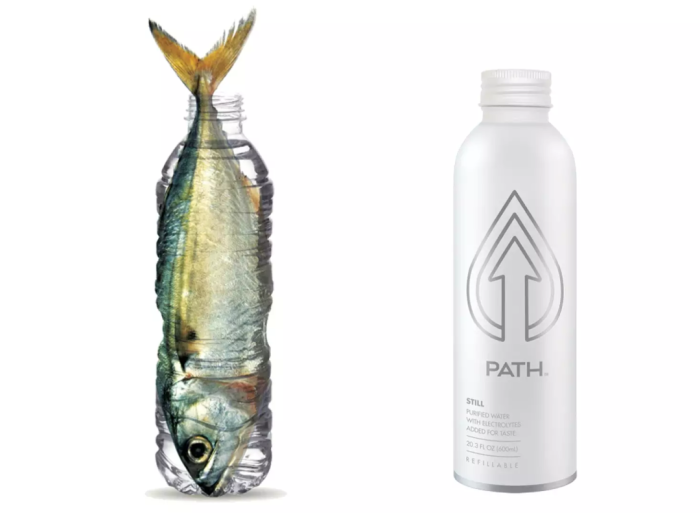
Image source: Pathwater official website
Pathwater then worked with The Trinity Brand on a brand refresh. The Refill It bottle was renamed Pathwater in 2017 and began its own rapid growth from 2018. They raised a seven figure sum in a F&F round and launched a social media campaign "Follow For A Bottle" which gained 40K+ Instagram followers, before rolling into campuses, parks, airports, hotels and now has over 350 distribution points across the US and is on the shelves of 50,000 retail stores.
After 7 years on the market, Pathwater has not been complacent, continuously improving packaging to make the aluminum can truly safe, durable, lightweight, and affordable: the water inside undergoes a 7-step reverse osmosis process to remove impurities, while electrolytes are added to supplement nutrients; and unlike other aluminum containers, Pathwater bottles have thicker walls and a wider opening, making it easier for consumers to reuse and recycle for refilling.
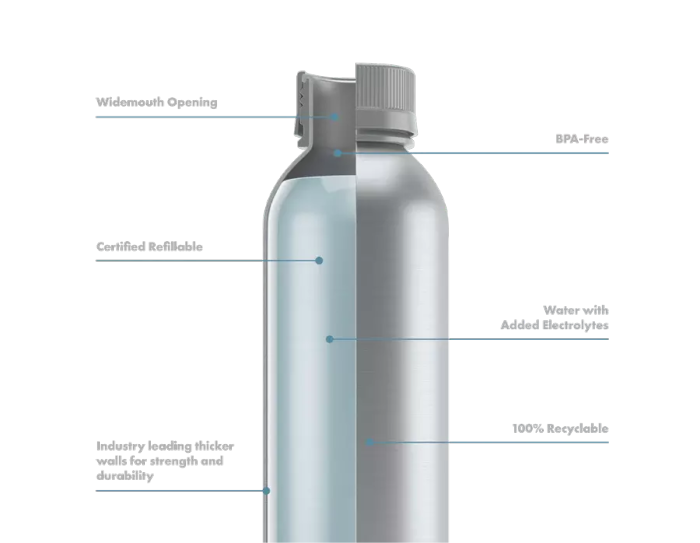
Image source: Pathwater official website
In addition to regularPathwaterbottled drinking water, the company has launched Pathwater Sparkling, a carbonated beverage, as well as Pathwater Alkaline, a pH alkaline drinking water with electrolytes.
Having a good product is not enough, how to make people realize that buying a bottle of aluminum canned water is not just a change of a more environmentally friendly material, but also has real benefits to the environment and society?
Pathwater works with a number of non-profit organizations to share the social responsibility. For example, Operation BBQ Relief is a non-profit organization whose mission is to provide food to local communities and support those in need. Pathwater has worked with them to commit 10 cents for every bottle of holiday wine sold, and also donated 3,600 bottles of water as OBR's deployment water in 2022.
The second move of Pathwater is a personalized creative, customizing your own eco-declaration. What sets Pathwater apart from other products is that it can make bottles with personalized colors and patterns as per customer requirements, adding an extra value experience to the product and allowing the buyer to have a unique eco-experience.

Image source: Pathwater official website
A strong alliance to create a brand chain effect. With a unique product concept, Pathwater has been recognized by the Palo Alto Unified School District and the Hayward Unified School District, gaining access to over 400 K-12 school districts, covering a student population of 1.5 million; it then collaborated with well-known brands such as Haralambos Beverage Company, Adidas, and Oliver Peoples, not only promoting the changes and efforts Pathwater has made for environmental protection but also allowing Pathwater to enter the high-end and luxury goods market.
02 Bubbling water, tea drinks, wine... Aluminum bottle water packaging everywhere
PET plastic bottles have always been the main force in beverage packaging.
With the global low-carbon sustainable trend sweeping across various industries, plastics, due to its low recycling rate and high energy consumption, has become the primary target in the green revolution of packaging. A large number of alternatives have gained popularity. Among them, aluminum cans, which have a high recycling rate and a high environmental contribution rate, are recognized as the best alternative to plastic packaging. In 2018, the British mineral water brand Life Water launched mineral water packaged in aluminum cans as part of its collaboration with the Natural History Museum in London.

Image source: www.foodbev.com
Data shows that the recovery rate for aluminum containers is more than twice that of their plastic, glass, and paper equivalents; and the environmental footprint of aluminum’s recovery, transport, and distribution processes is much smaller compared to other liquid packaging alternatives such as plastic and glass. Moreover, aluminum is a higher-value commodity, which provides manufacturers with a greater incentive to recycle and reuse this sustainable material.
In recent years, water in aluminum bottles has frequently appeared in the beverage innovation awards and packaging competitions, and most of these products have been launched in the market.
UK Re: water pure still water is the world’s first 100% recycled aluminum mineral water bottle. The product, made with British spring water, uses 100% recycled aluminum as the packaging material, allowing the water to stay cool and fresh for longer; used aluminum bottles can be refilled, reused and recycled. The product won the Metal Packaging Award at the 2021 UK Packaging Awards.
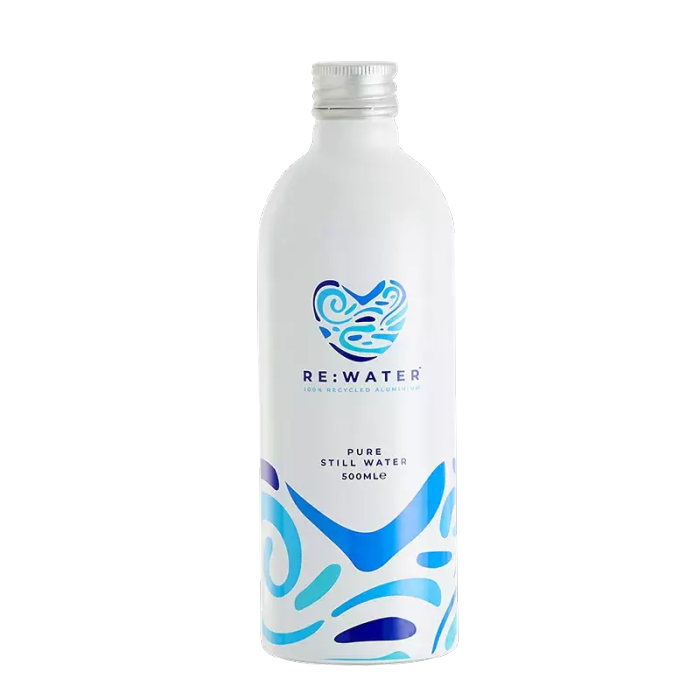
Image source: Rewater official website
Lofoten Arctic Water is a natural, high-quality water from the Lofoten Islands in Norway. The product is made from clear mountain water and packaged in a recyclable aluminum bottle with a screw cap, designed by renowned designer Str mme Throndsen Design. The bottle is made by Ball Corporation, a leading manufacturer of aluminum cans and bottles. This packaging concept helps minimize the amount of microplastics that eventually end up in the ocean. With this concept, the product has won the Global Water Drink Awards 2021.

Image source: lofoten-water.com
Heart Water, a product from the United States, is an alkaline bottled water made with rainwater as its raw material. The packaging is made of 100% recyclable aluminum materials, free of BPA, and reusable; the content is from "cloud water" that has never touched the ground, and it is enriched with Himalayan pink salt, containing electrolytes and antioxidants. According to the official website, the company's new packaging will use 100% recycled cardboard, and some of the sales profits will also be used for children's charity.
Bottled water, whether mineral or spring, has long been known for its pure and refreshing qualities. However, the American brand Open Water has redefined the category impression with its electrolyte sparkling water, which refreshes the aluminum can application. The brand's products are packaged with an average of 73% post-consumer aluminum, which is of high quality and shatterproof, and come with a resealable spiral cap. It is reported that Open Water is the world's first* bottled water brand to receive "climate neutral" certification.
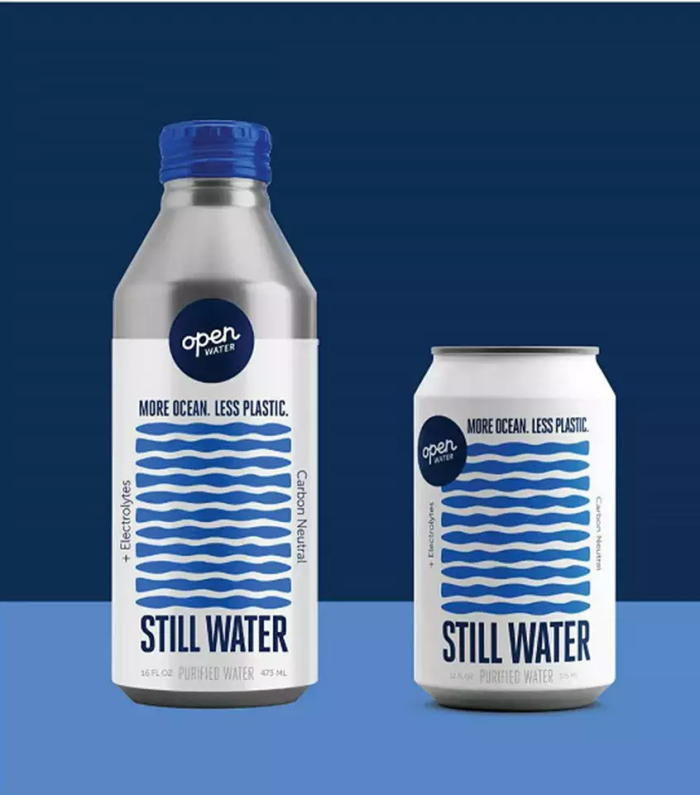
Image source: drinkopenwater.com
Tea drinks are also lifting the curtain on the replacement of PET packaging. This year, on Earth Day, the well-known Japanese tea beverage brand MUJI (No Brand) replaced plastic bottles with aluminum bottles one after another, and the first batch of new packaging unveiled includes 12 varieties. The aluminum bottle packaging continues MUJI's consistent style and temperament, and the presentation effect on the shelves is surprising.
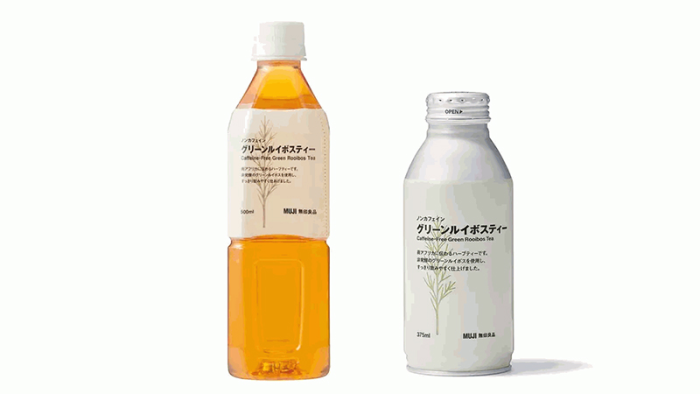
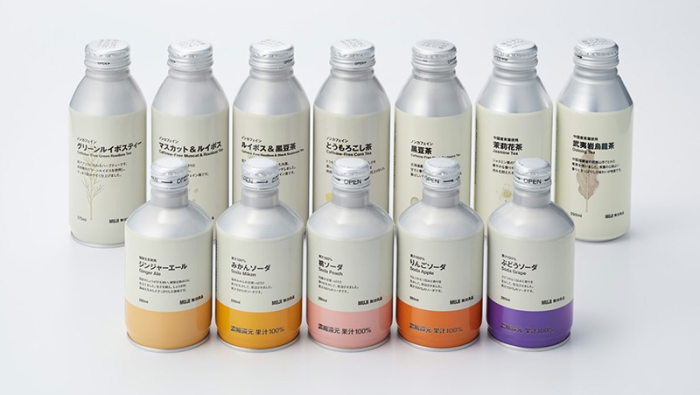
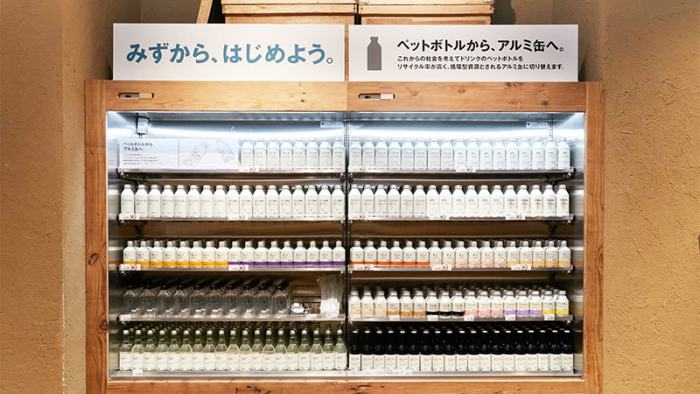
Image source: toodaylab
***The biggest eye opener was the aluminum can wine.
From glass bottles to metal cans, the outdoor drinking scene has created a revolutionary demand for wine packaging. Besides being more convenient to open and easier to carry, the change in material also means a change in the drinking experience. How acceptable is wine in metal cans/bottles to consumers?
In 2019, a trade research firm that tracks canned wine, WICresearch, conducted a consumer survey that found 63.6 percent of the nearly 3,500 male U.S. consumers surveyed and 48.3 percent of women said they would try canned wine. In a blind taste test, the proportions who preferred the taste of the can were roughly the same (48.5 percent vs. 45.3 percent).
So it turns out that there is a considerable new market behind aluminum can-packaged liquor. The US brand TRIVIUM PACKAGING Lola has launched a VQA wine series in aluminum bottles that follow consumer trends. The product is produced by the Canadian winery Pelee Island, one of the oldest wineries in the country. The bottle is decorated with elegant floral patterns and has a shape similar to traditional wine glass bottles. The product has been nominated for the "ALCOHOL BEVERAGE OF THE YEAR" at the 2021 Global Drink Innovation Awards and has also received the "Highly Recommended" award from the organizing committee.
The attention and adoption of aluminum packaging in overseas markets has entered a critical phase. The complete phase-out of dependence on single-use plastic bottles for water is being driven by foreign brands in collaboration.
03 Technological innovation and policy guidance: How to implement and move forward with aluminum can packaging in China?
Unlike the more popular "alternative" approach overseas, the domestic plastic packaging revolution focuses more on issues such as packaging light weighting and partial plastic reduction.
For example, not long ago, the company Liberty Coca-Cola Beverages, which is responsible for the bottling of Coca-Cola and other drinks in its portfolio, began using a new type of cardboard "KellClip" to replace plastic packaging. While protecting the top of the can from contamination, it also provides enough support to allow people to pick up a full case of soda with just two fingers.

Image source: ifanr
And on World Environment Day on June 5 this year, Danone and LanzaTech jointly launched the "Smart Carbon Bottle" technology, which is a revolutionary innovation in the processing of PET. Unlike the traditional PET bottle synthesis process, LanzaTech uses advanced "carbon capture" technology to directly convert carbon monoxide and carbon dioxide from carbon-rich gas sources into key raw materials for PET bottles through microorganisms, reducing the use of oil and carbon emissions.
Various plastic reduction innovations are based on the current dominance of PET bottles in the market. The massive supply and demand for plastic packaging in the market also makes gradual innovations for PET more operational.
But in fact, the domestic market is not short of potential for the production and promotion of aluminum packaging. According to the "Research on the Development Trends and Future Investment Forecast of the China Metal Packaging Market (2022-2029)" released by Guan Yan Tian Xia: the top three industry users of metal packaging in our country are beverage cans, metal caps and metal large cans.
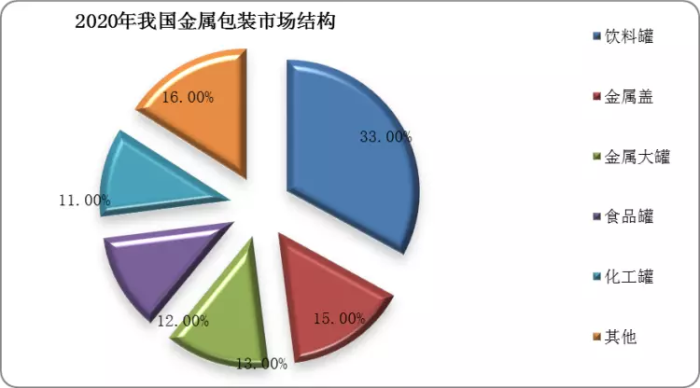
Image source: Guan Yan Tian Xia
Aluminum packaging has been widely used in categories such as carbonated beverages, beer, and milk powder cans. With the increasing domestic environmental protection requirements, the improvement of aluminum packaging technology, and its inherent excellent properties such as recyclability, the market size and production and sales volume of aluminum packaging have been continuously growing. Four years ago, Tongren Peijian launched F6 Super Shot plant energy drinks packaged in aluminum bottles, and Beijing Er Guotou was the first in the industry to use aluminum bottle packaging for liquor, etc., which have brought significant demonstration effects to the industries they are in.
However, there are some difficult-to-overcome technical barriers to the widespread promotion and use of aluminum packaging.
Common carbonated beverages and beer and other packaging, basically using two-piece cans stamped from aluminum. The characteristics of this packaging are thin, if the internal environment is not under pressure, it is very easy to deform. For example, after the material of the eight-treasure porridge is filled, it still needs to be sterilized at high temperature and matured, which cannot be done if it is used in two-piece cans; and similar to mineral water and other non-pressure liquid containers, its structure is more difficult to maintain shape stability when stacked.
In fact, many packaging enterprises in China have been exploring more flexible aluminum bottle manufacturing technologies. Among them, the impact extrusion (IE) aluminum bottle technology, which was born in the United States around 2000, has been widely promoted in China and has become one of the main processing technologies for aluminum aerosol cans and aluminum bottles.
With the help of big data analysis and intelligent manufacturing, today, the processing new technology of IE type aluminum bottles is changing with each passing day. For example, photochromic aluminum bottles, temperature-sensitive color-changing aluminum bottles, touch aluminum bottles with touch matte ink, embossed aluminum bottles, full-body plastic deformation aluminum bottles, etc., provide a rich imagination space for product innovation.
Beyond technical considerations, the drive for policies and standards will have a positive impact on domestic aluminum packaging.
It is reported that the Research Institute of Food Fermentation in China, entrusted by the National Center for Risk Assessment of Food Safety, is carrying out the "Research on the Evaluation of Primary Regeneration and Utilization of Metal Products for Food Contact" and the drafting work of the group standard "Regenerated Aluminum Alloy Thin Plate for Food Contact". In order to accelerate the pace of primary regeneration of metal packaging in China and connect with the international community, the future work will be carried out from four aspects: exploring the recycling mechanism, establishing the reutilization system of the industrial chain, promoting consumer education and establishing the standard system.
04 Summary
The transformation of packaging materials, accompanied by the development of industrial technology and the enhancement of consumer awareness, presents a spiral upward process. From the most basic protective function to enhancing consumer experience and then to conforming to the low-carbon green concept, the evolution of packaging is always a parallel forward movement of several materials, completing the overall upgrade in the process of competing for competitive advantages. For beverage packaging, glass bottles, PET, aluminum bottles, multi-layer composite materials, and fully degradable plant-based materials all have their own advantages and disadvantages. In the process of being pushed to the market, they will also face considerations such as cost, technical barriers, regulatory standards, and consumer education.
In today's China, a packaging revolution is likely to be a long journey. Whether aluminum cans can become the protagonist of this revolution depends not only on the change of consumer awareness and consumption habits, but also on the long-term planning and market prediction of beverage leading brands for low-carbon packaging.
If there were also a few more pathwater-like pioneers in China, would it accelerate the commercialization of aluminum bottles?